A Hong Kong kid and a Chinese system
The BBS itself began in Canada, in 1992 — in Hong Kong there had not even been a modem; there was nothing to connect to. But the boy who would build it began in Hong Kong.
When I was small, the moment dinner ended I would slip into my older brother’s room to use his Apple IIc. Programs in those days came printed in books and magazines — thousands of lines of BASIC that you typed in yourself, line by line, before anything would run; one wrong character and the whole thing failed. I had that patience. My mother told all her friends: ‘My son is so clever — five, six years old and already playing with computers. A computer prodigy.’
A few years later, in Primary Five or Six, came the ETen Chinese System.
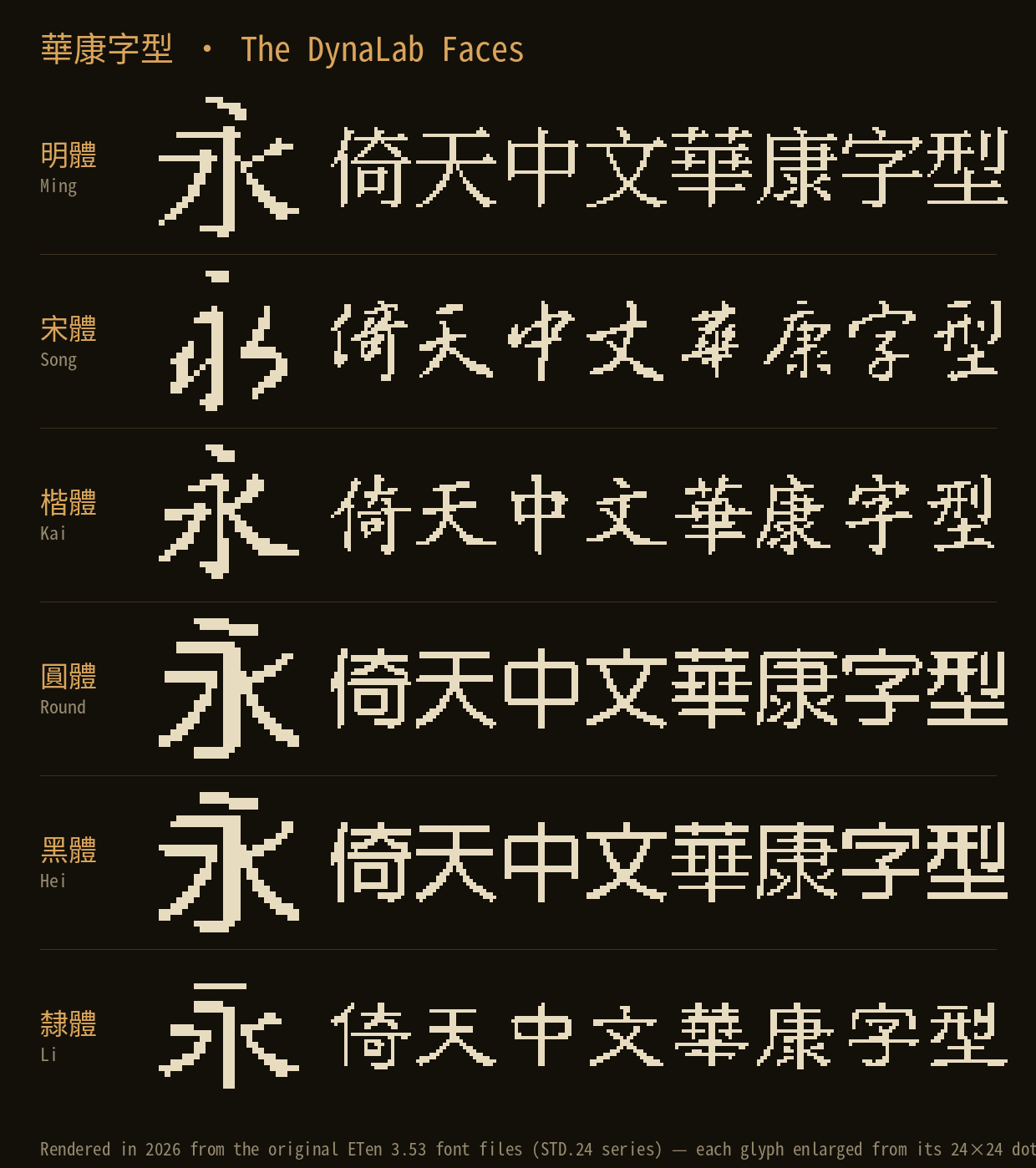
What I loved first was how it looked. The Chinese characters came from a DynaLab character card, and the fonts were beautiful — crisp, deliberate; the full set of original typefaces is exhibited further down this page. I spent hours in the playful corners of that world: the typesetting programs, and above all a Zi Wei Dou Shu fortune-telling program. I would cast a natal chart and print it out on a dot-matrix printer, sheet after screeching sheet of tractor-feed paper, then tear off the perforated edges to read my fate.
Those beautiful faces were not free, either. The character card was an extra piece of hardware, bought separately — and mine was bought with my own pocket money. I was about thirteen, and I went to DynaLab's office in Central to buy it, alone. The whole office was surprised: a kid, buying a font card. Only years later, when the Chinese edition of Windows 95 bundled the DynaLab faces in, did they become something every machine simply had.
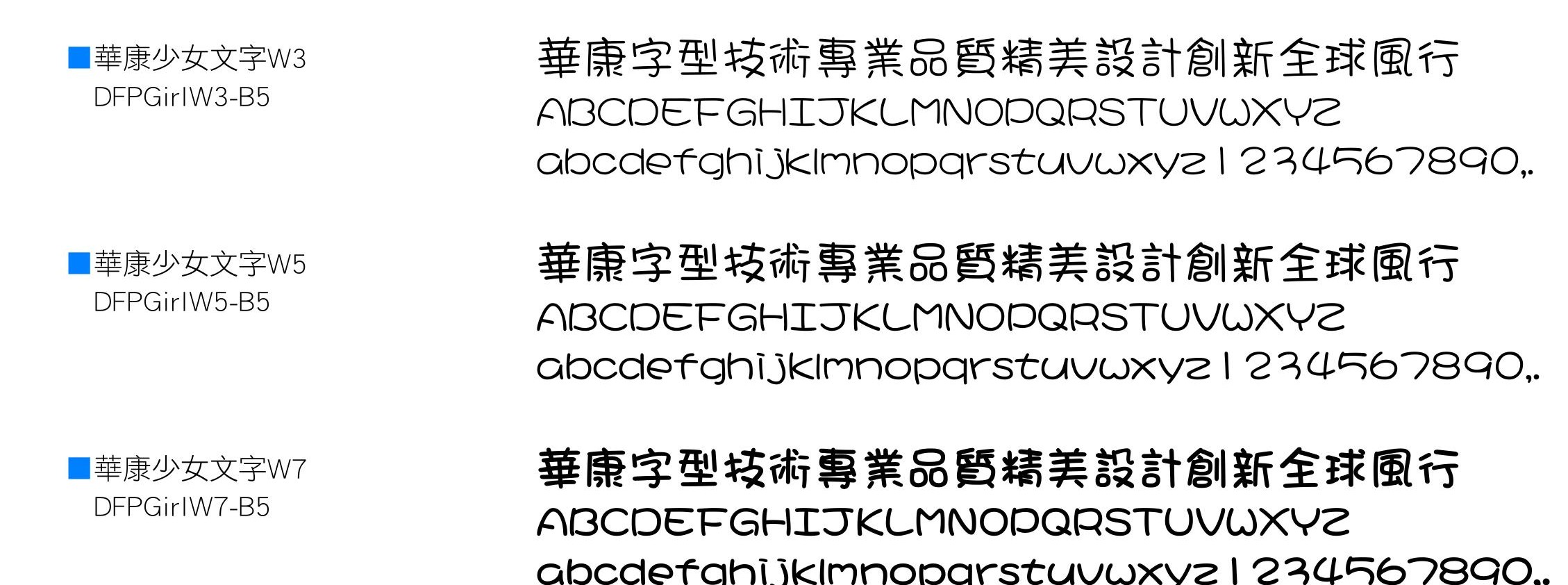
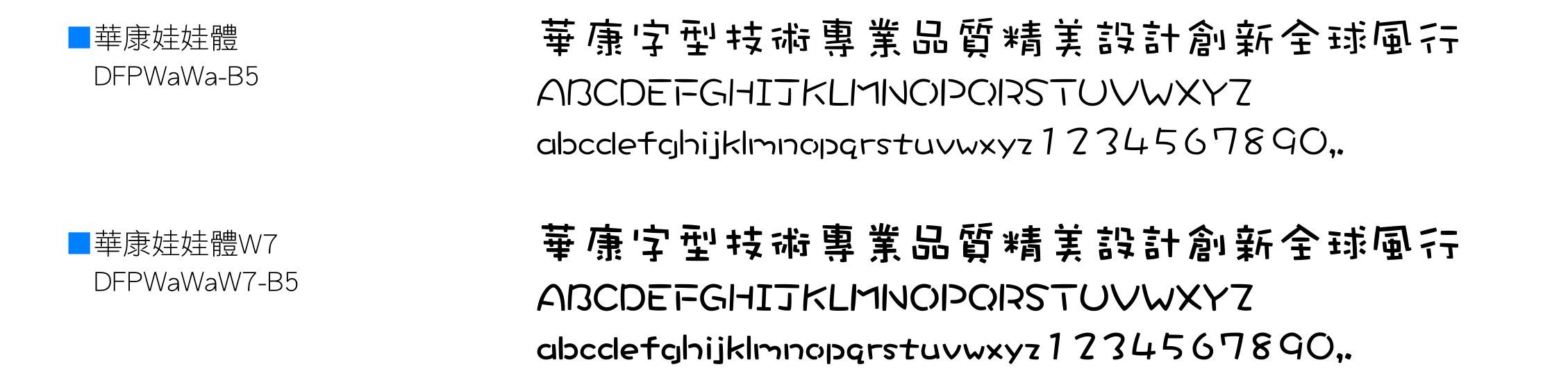
The card itself is long gone — but the faces I loved most outlived it. The playful DynaLab faces, Girl and WaWa, are still sold by DynaComware today; these specimens are from the company's official 2026 catalogue, the same pages a buyer would leaf through now:
ETen also had its own invention, the Array input method — thirty keys, every radical placed by the shape of its strokes. It was elegant, and famously hard to learn.
you cannot drive. I never did learn it.
The ten-year-old consultant
My father's company ran on the same technology — the ETen system, and SCSI, which is how the CD-ROM drives and the flatbed scanner connected. Somehow, at ten or eleven years old, I was the person in that company who understood both best.
Vendors came to sell equipment, and I sat in the meetings with them — a schoolboy advising on the purchases. Nobody thought this was strange enough to stop. Least of all me.
Letters to Taiwan
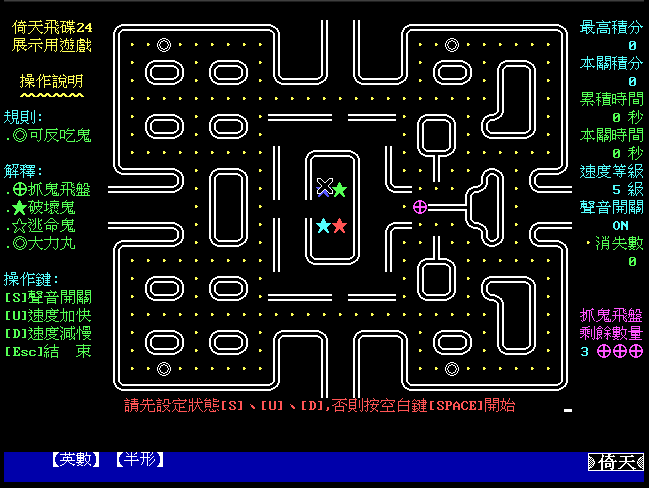
When the family immigrated to Canada, I kept the thread the only way a kid could: I wrote letters to ETen in Taiwan, and exchanged ideas with the sysops there. The Chinese system I had grown up with was on the other side of the Pacific now. So, soon, was almost everything else.
And before Wimsey — before the BBS — there was CompuServe. I was a fan, and I had their calling card: whichever city you were in, there was a local number that dialled you into the same walled garden of forums, files and mail. It was my first taste of being connected — rented from someone else's network. Everything that came after was me building my own.
Grade 9, a new country — and a name
I arrived in Canada in Grade 9 — 1992, the very year the BBS of the next chapter begins. School was not where my heart was; my marks were mediocre, and my mother was not pleased that the computer still came first. But she had started this — she was the one who had cultivated the interest when I was small — and even when money was tight and my report card gave her every reason, she kept paying for it. Every phone line this story is about to need was paid for by her.
The first station I built in Canada, I named for the one thing a teenager in a crowded house never gets. I called it Peace and Silence! BBS — because I found my mother annoying, and I wanted some quiet. That is how it felt at fifteen. Looking back now, she was not annoying at all — but a teenager does not know that yet. Eddy later gave the name a grander expansion — Peace And Silence International Network: PASIN. Before that, the little order-taking station I ran for the Toronto agent had a plainer name still: 中文人BBS.
a machine for talking to the world all night.
That machine is the next chapter.
📡 Next chapter: Pasin, Yo!Net & Bear Bear Cafe →