bearever.com · A Retrospective中文版

Private Pilot

Yangjiang · Shek Kong · 2007

In the two years after I sold my company, I went and learned to fly. This chapter holds all the evidence of those days.
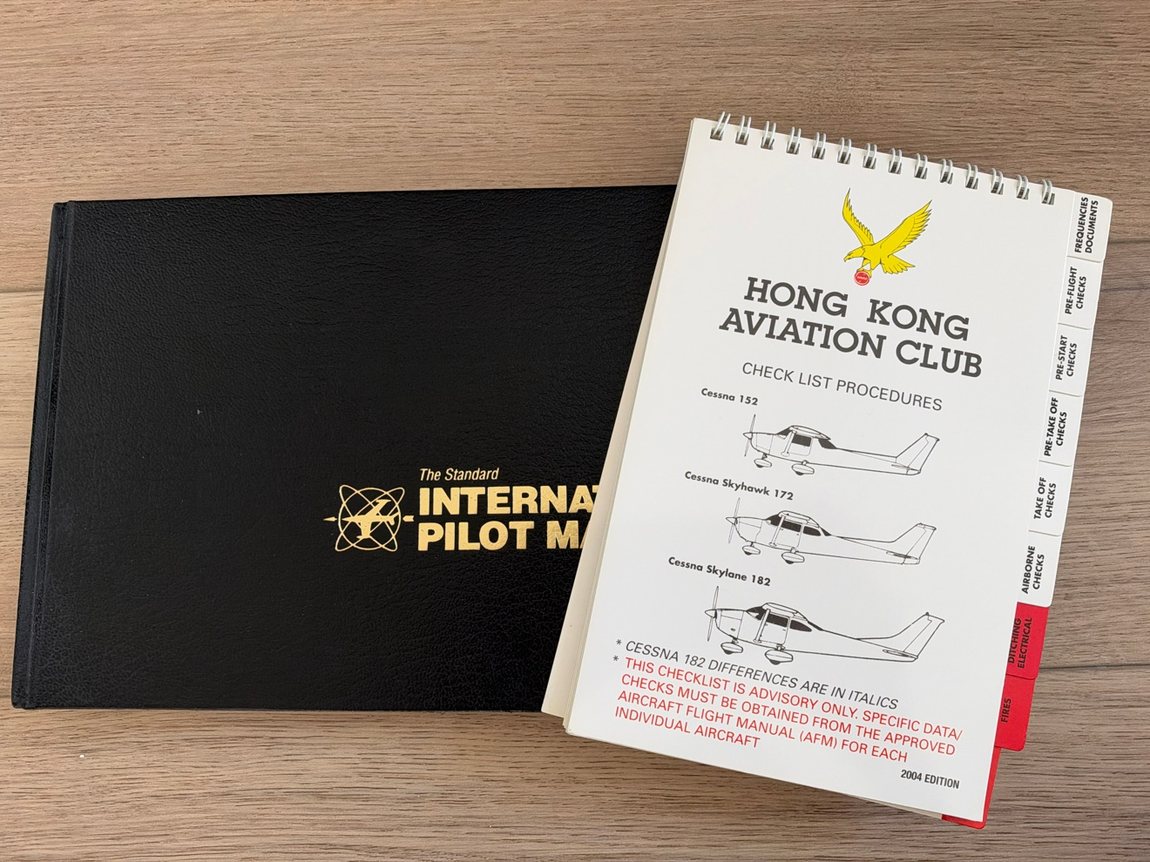
The Hong Kong Aviation Club checklist on top of the logbook
The kit. The Hong Kong Aviation Club’s Cessna checklist (2004 edition — the 152, 172 and 182 all covered), and my logbook: The Standard International Pilot Master Log.
2007-04-03
First time off the ground
262
Takeoffs & landings in the logbook
ZGYJ · VHSK
Yangjiang Heshan · Shek Kong
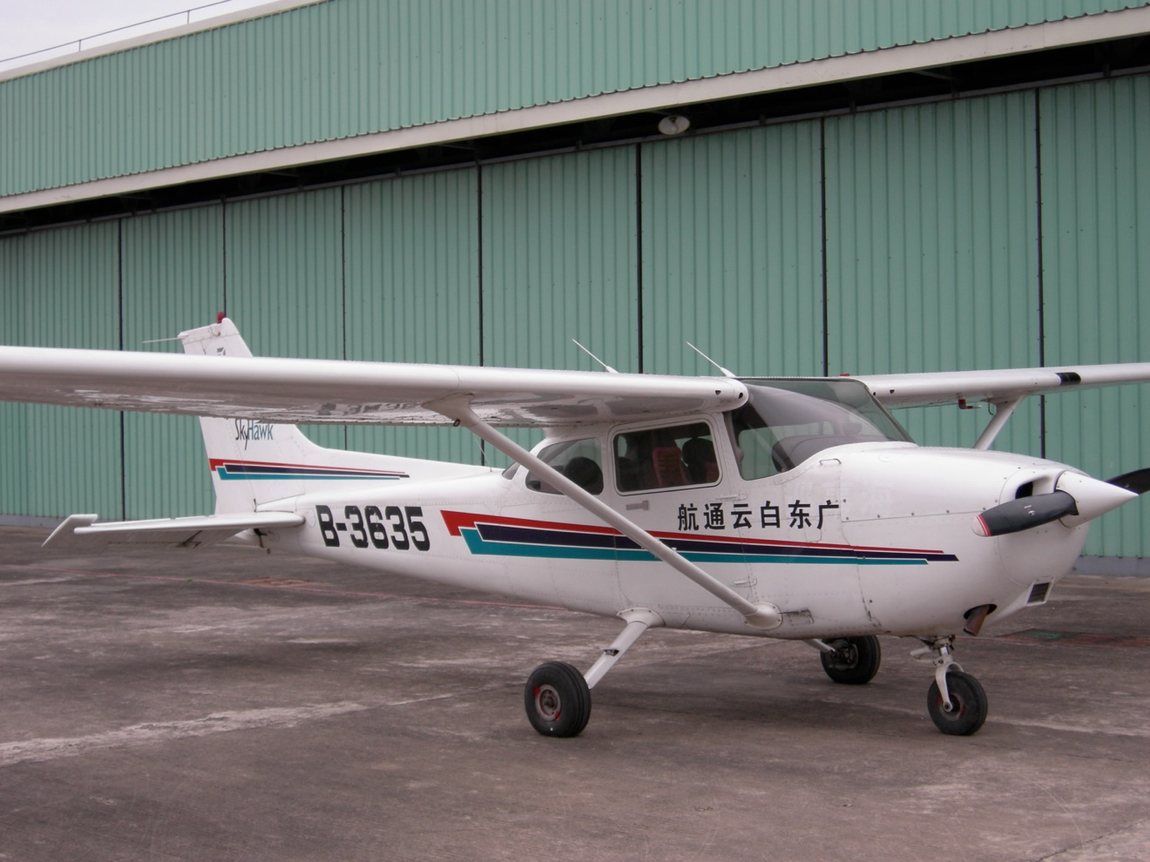
B-3635
Cessna 172R · the trainer
Licence in hand
Mainland Private Pilot · Hong Kong Class 1 medical

Why I sold Mecca

By 2004, my family had moved back to Hong Kong, one after another, and I was the only one left in Vancouver, holding on to the business I had built with my own hands. Then I learned my mother had liver disease. For two years it never left my mind. In mid-2006, I finally decided to sell the company and go home to Hong Kong.

And I won’t pretend it didn’t hurt. There were more than a dozen good colleagues; SkyHost was just getting started, and Site2Go and Store2Go still had so much room to grow. It was the first time in my life I had to set down something that was still growing, with my own hands.

The in-between years

Back in Hong Kong, after six years of being my own boss, I couldn’t get a single job. Hong Kong’s HR departments don’t look at what you’ve done — they look at what certificates you hold. So in that year or two of limbo, I did two things: I re-sat my computer certificates, one by one; and I went after one of my life’s dreams — learning to fly, to become a private pilot.

There weren’t many places in Hong Kong to learn. Macau seemed to have it; further afield, the mainland. Travel wasn’t what it is today: the cross-border bus from Hong Kong to Yangjiang took six or seven hours. I usually left on Sunday night and came back on Friday, every week, for six whole months.
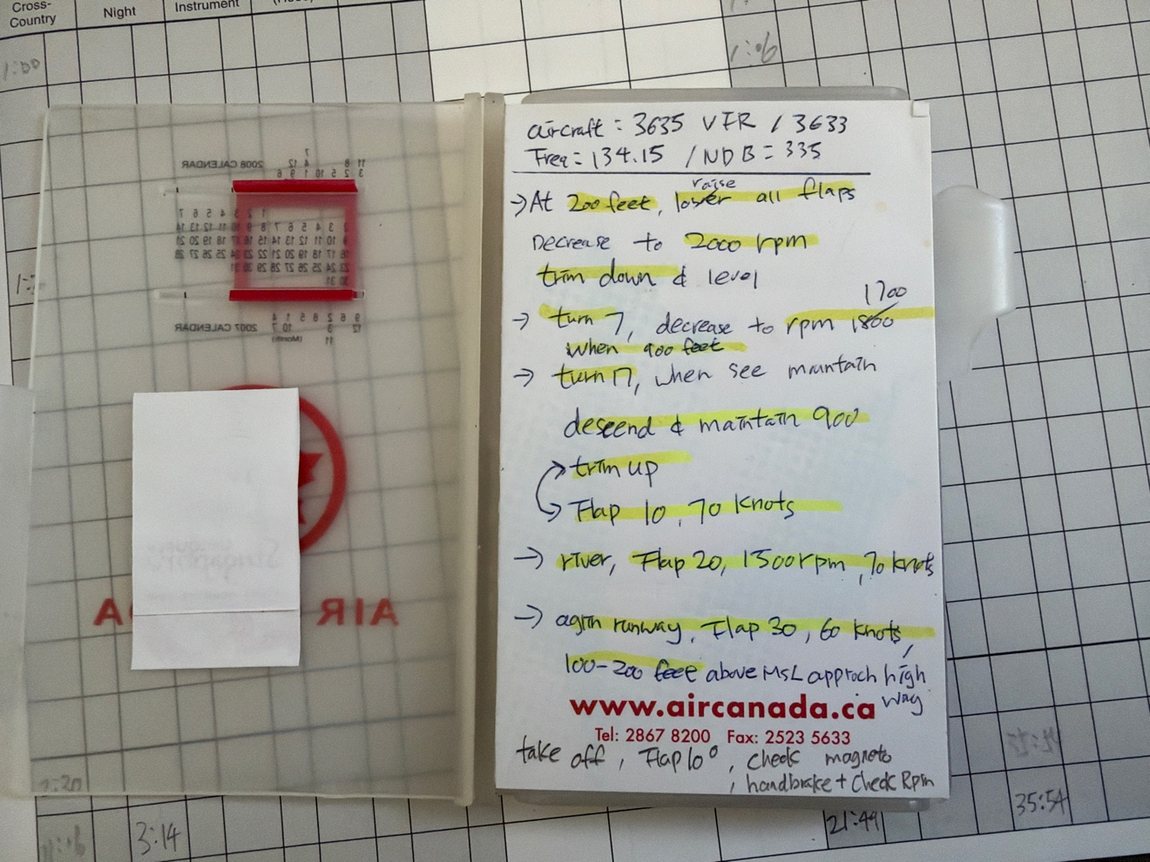
The handwritten notes card from the first lesson
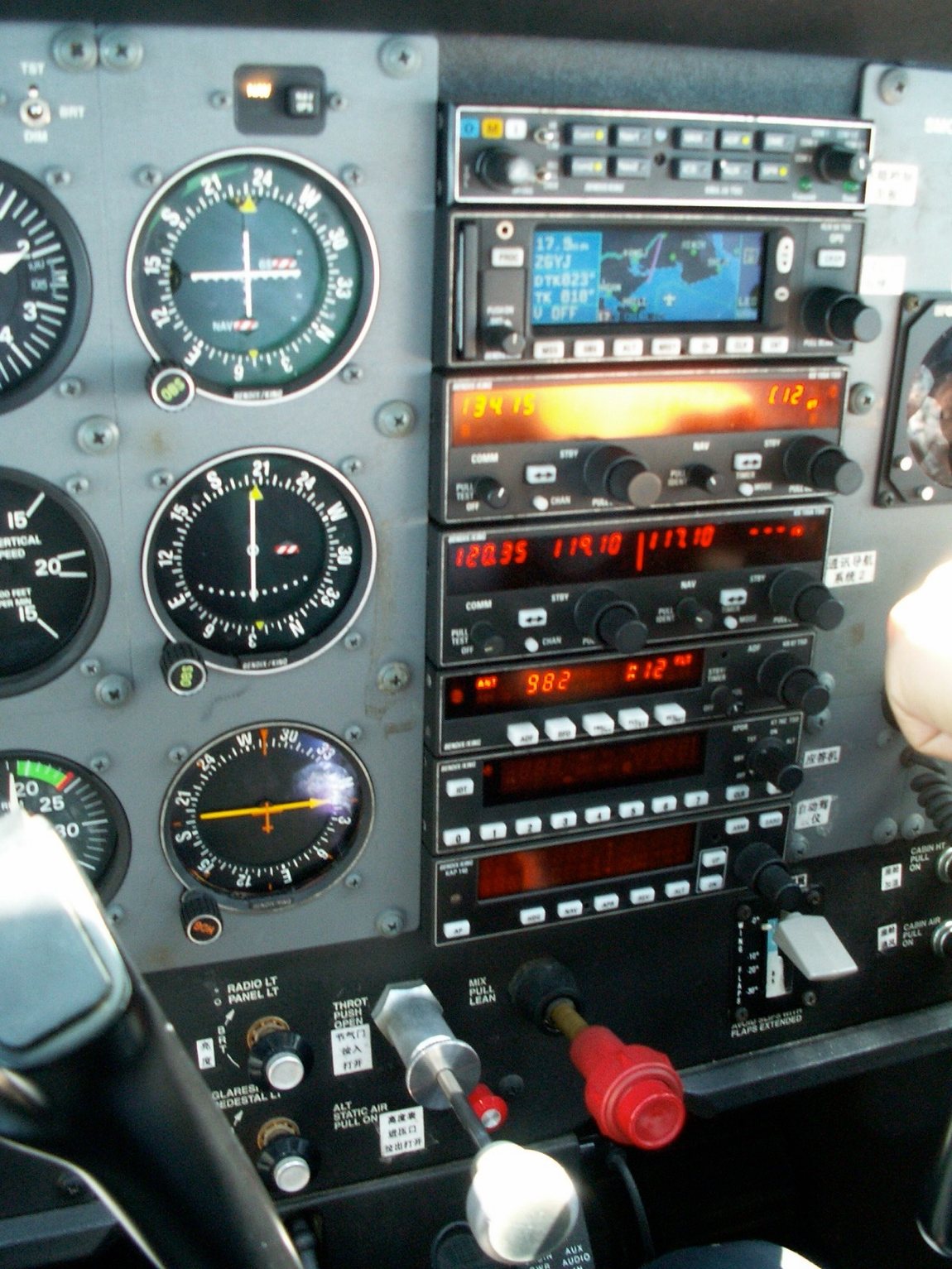
First-lesson notes. Written on an Air Canada notepad card: aircraft 3635, frequency 134.15, NDB 335, and the whole circuit procedure — flaps up at 200 feet, turn at 900 feet, “when see mountain”, follow the river. Flying then was learned by reading the ground with your eyes.
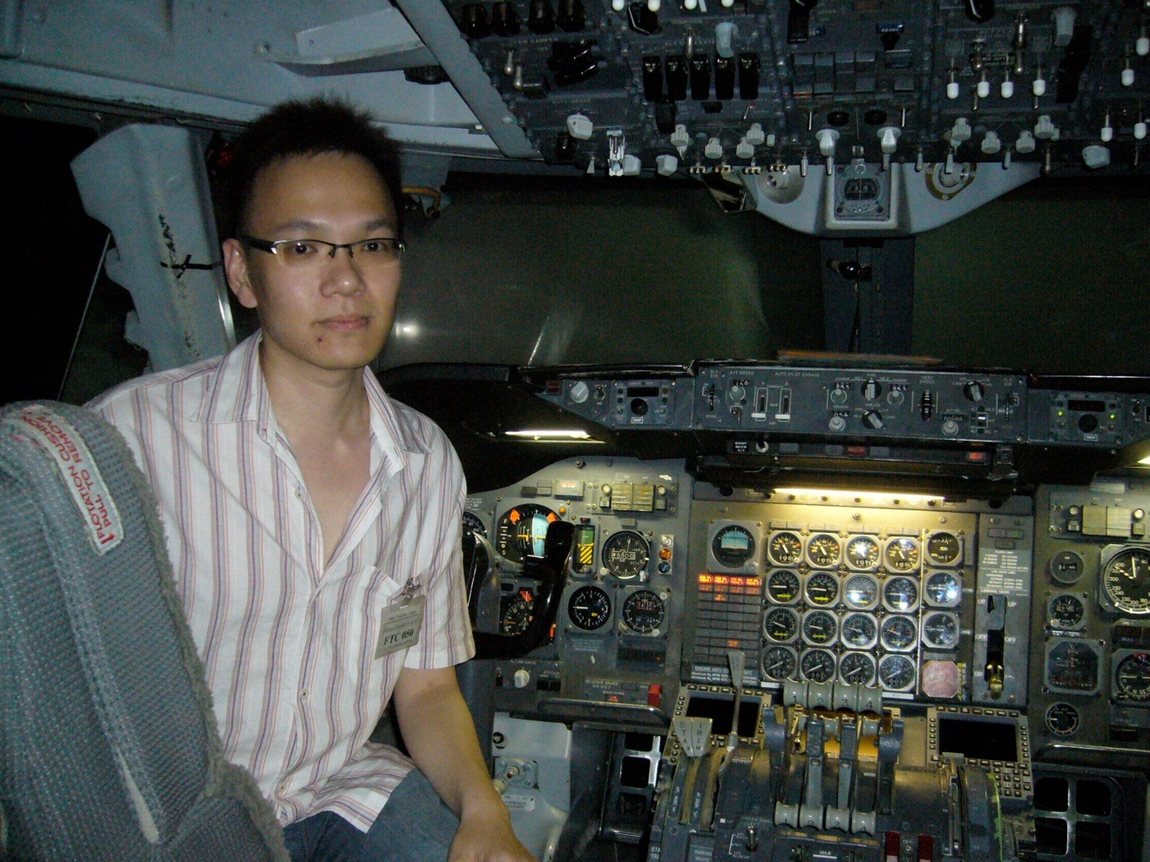
From the unemployed days — an Asia Miles redemption session in a flight training centre simulator
From the unemployed days. In that stretch, I redeemed Asia Miles for a session in a Flight Training Centre (FTC) simulator — this photo is from that day. I had no idea then that the airlines would come back into my life in a completely different way.

Yangjiang

In Yangjiang I met many friends — a lot of them, like me, were there chasing a dream. Among the students, besides mainlanders, there were Japanese students too. The intensive training piled up my hours quickly; afterwards I came back to Hong Kong and continued at Shek Kong.
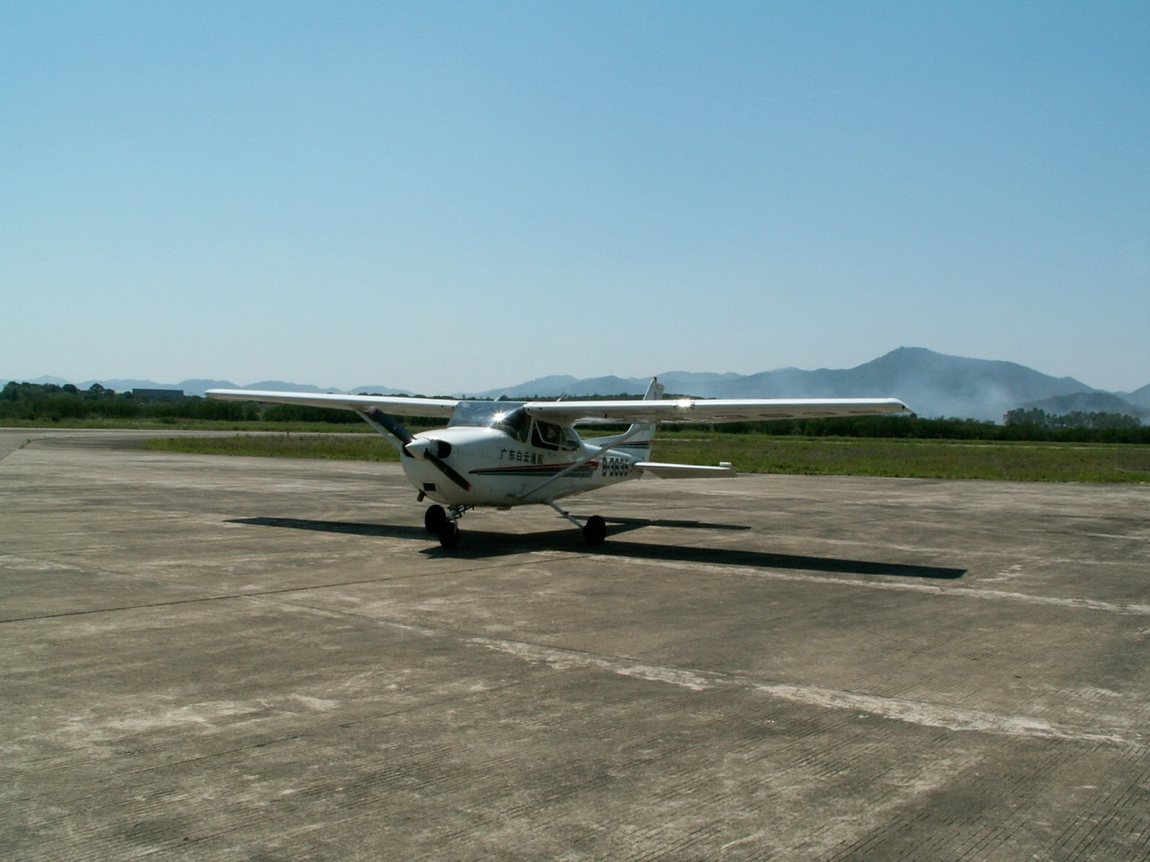
A Cessna on the Yangjiang apron, hills behind
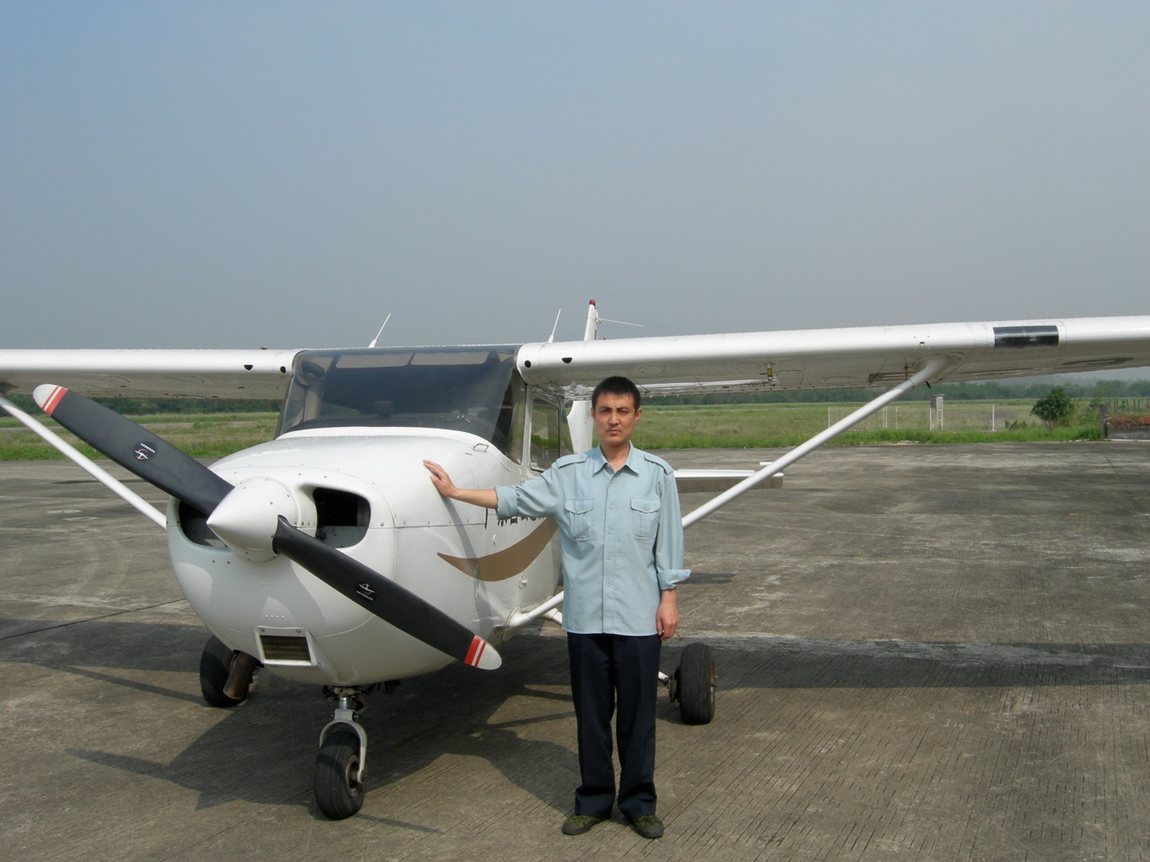
Yangjiang Heshan. The apron, the far hills, and the sky of those days. For six months, I spent five days a week here.
Logbook page one: beginning 3 April 2007
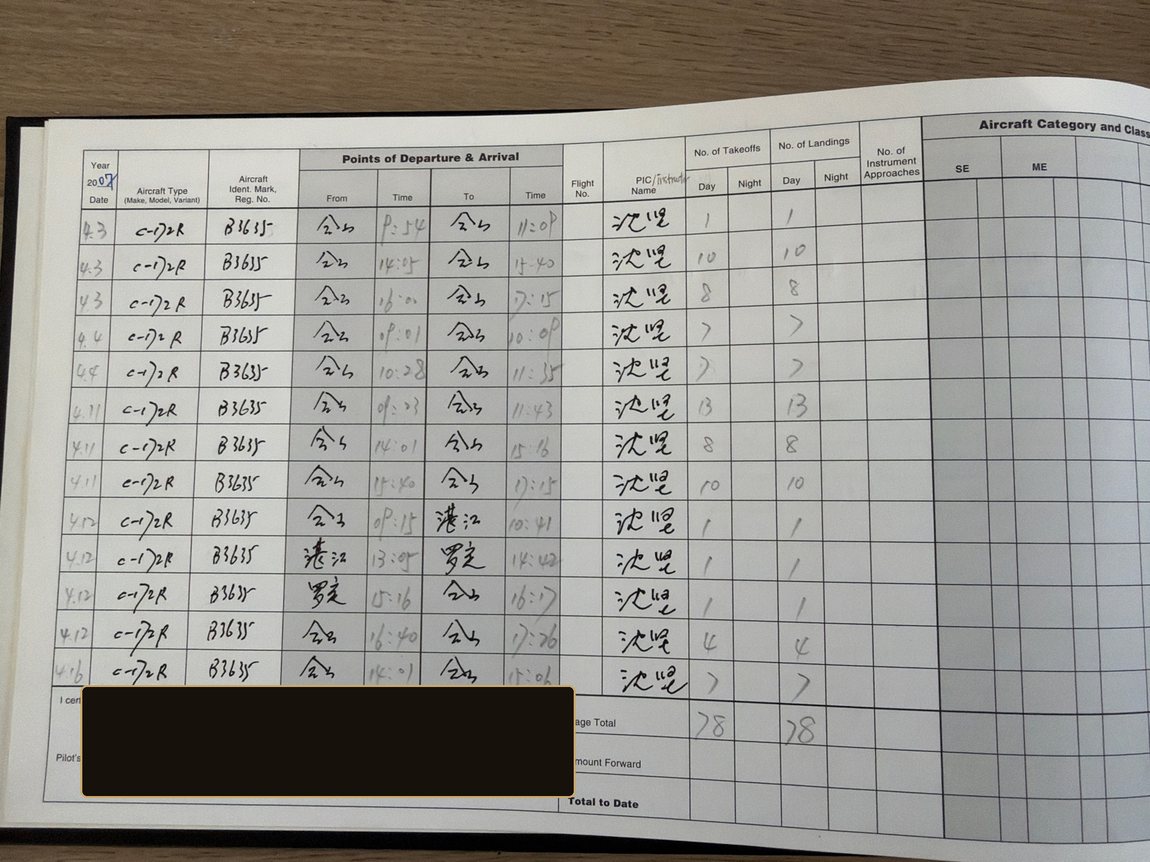
Logbook, page one. 3 April 2007, 09:54 — my first time off the ground: one takeoff, one landing. That same afternoon I was already flying a session of ten landings. The page totals 78, every one of them in B-3635, every one with the same instructor. (The signature column is covered, at my own wish.)
B-3635 herself, a Guangdong Baiyun General Aviation Cessna 172
B-3635 herself. Guangdong Baiyun General Aviation’s Cessna 172 — every row on the first page of my logbook is her.
Instructor Shen standing beside the Cessna
The man who taught me. Instructor Shen — from my first takeoff to the day he let me fly alone, he was the one in the right seat. Every row on the logbook’s first page carries his surname in the PIC column.
The cockpit radio stack: GPS reads ZGYJ, frequency 134.15
Corroboration. In the cockpit, the GPS reads ZGYJ (Yangjiang Heshan) and the radio is tuned to 134.15 — exactly the frequency written on my first-lesson notes card.

Back to reality

The licence, in the end, I got — a mainland Private Pilot licence; and in Hong Kong I passed the Class 1 medical, the standard for professional pilots.

In truth, I did think about going to Australia to continue. Shek Kong has no instrument rating to train for; the next step up was the CPL — the commercial licence. There were only two roads: Australia, or back to Canada. Both of them meant burning more money.

By then I had been out of work for two years. My mother supported me all along, but money is not something to burn. And honestly, I was never strong at maths or physics; I had over five hundred degrees of short-sightedness and was in my early thirties — competing with the young was never going to be easy. And there was one more thing: for a man to go on day after day producing nothing — that sits badly in the heart.

In the end, I didn’t want to spend any more of my mother’s money, and I went back to IT.
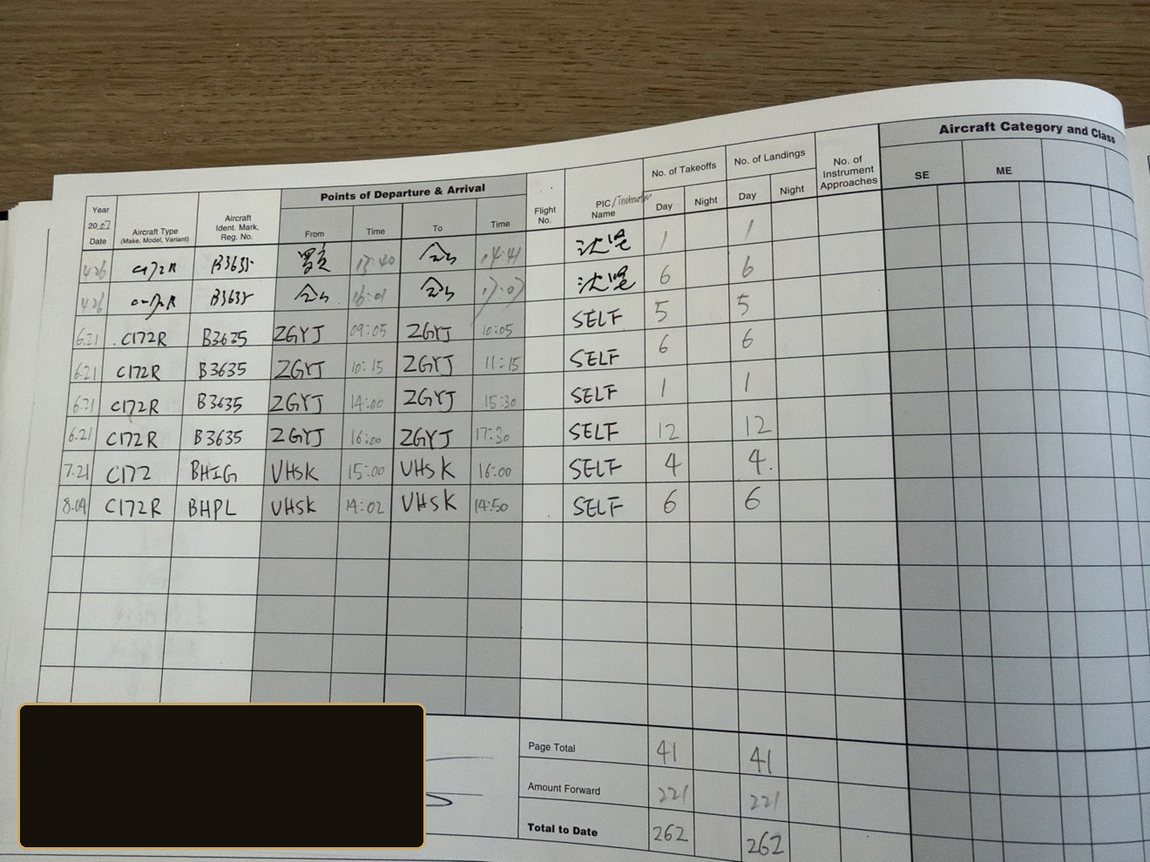
Logbook: June 2007, the PIC column reads SELF; then Shek Kong, VHSK
From student to PIC. On 21 June 2007, the PIC column reads SELF for the first time — four sessions in a day, one of them twelve landings. In July and August the scene shifts to Shek Kong (VHSK), flying the Hong Kong-registered B-HIG and B-HPL. The recorded takeoffs and landings reach 262. (Signature column covered.)
In the cockpit in flight, the coast below
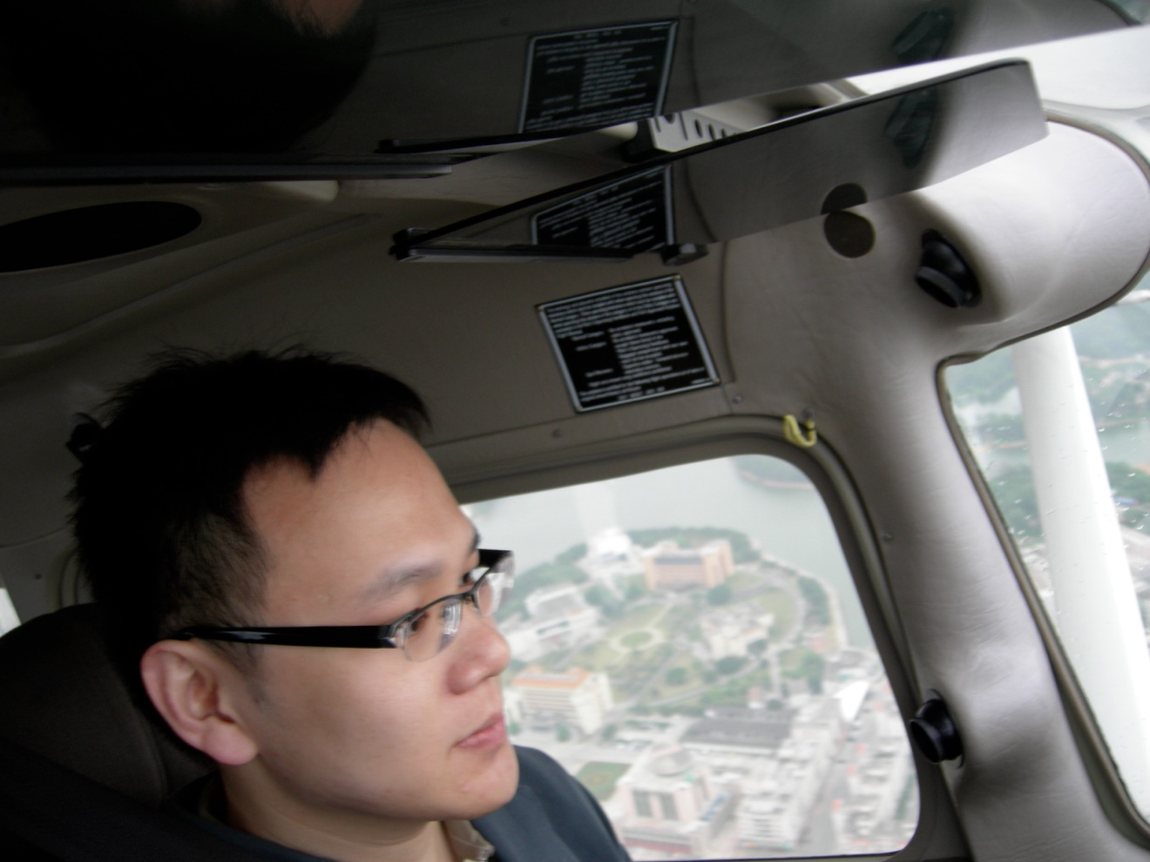
Airborne. This is not a selfie — taking a photo while flying would have been far too dangerous; the instructor beside me took it. There were no phone cameras then; you had to haul a big camera up with you, which was quite a production. The iPhone wasn’t out yet in those days — every photograph was precious.
To keep fit for flying, I ate nothing but plain boiled chicken, and gave up sugar.

Epilogue · 2024

In the years that followed I went back to IT, and eventually into airline security assessment — flying itself had long been set aside.

On my birthday in 2024, my wife Avis took me to a flight simulator in Toronto to relive it. She didn’t fly that day — she stood behind me taking photographs. The instructor set up a flight from Macau to Hong Kong, landing at the old Kai Tak Airport — Runway 13, one of the hardest landings in the world, at an airport that closed in 1998. Seventeen years on, in a simulator, I landed there once more. It was thrilling.
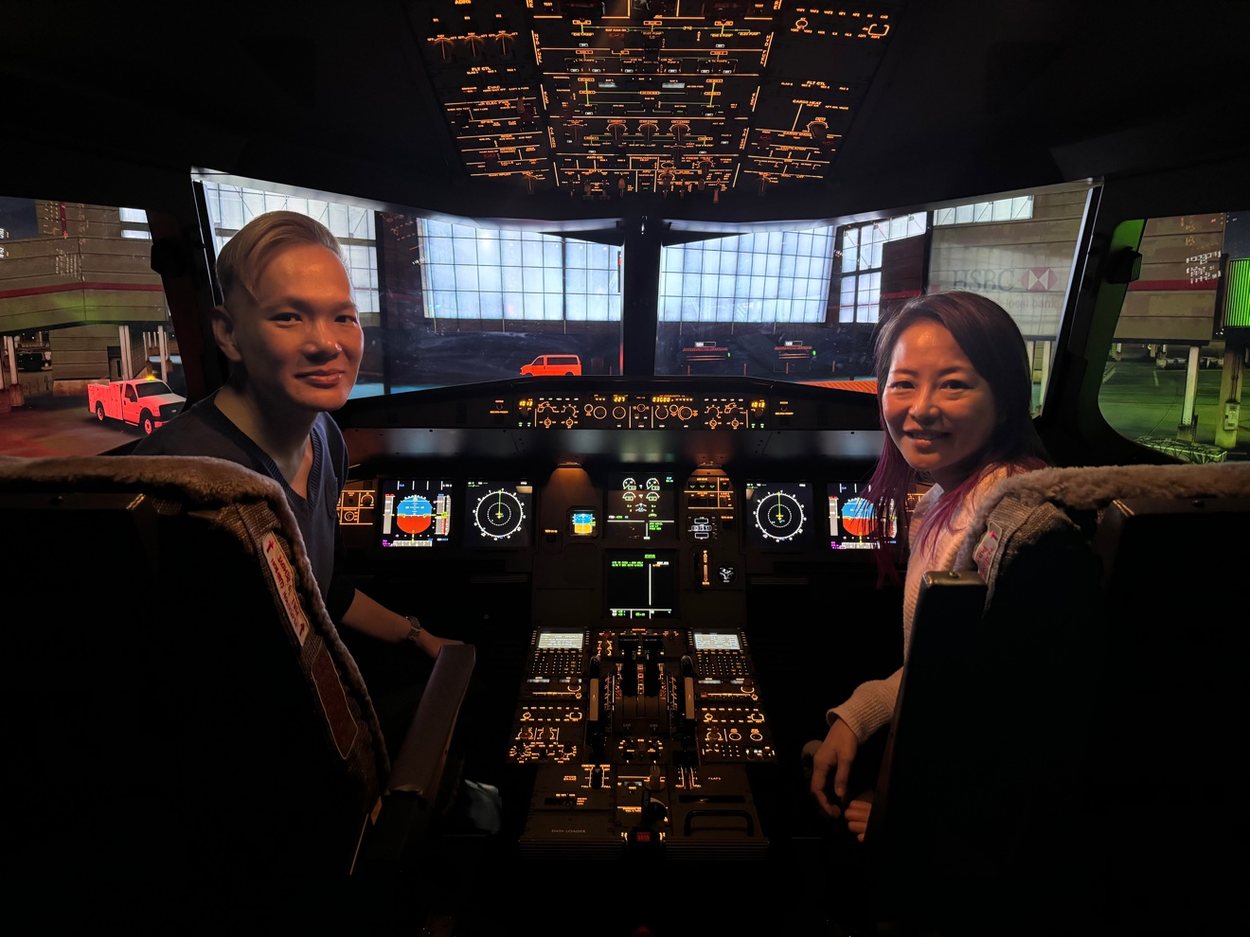
2024, a Toronto flight simulator, the two of them together
2024 — the left seat, still. Avis sat in for this one photo — the one who flew that day was me; the one holding the camera was her. Outside the window: the Kai Tak approach.
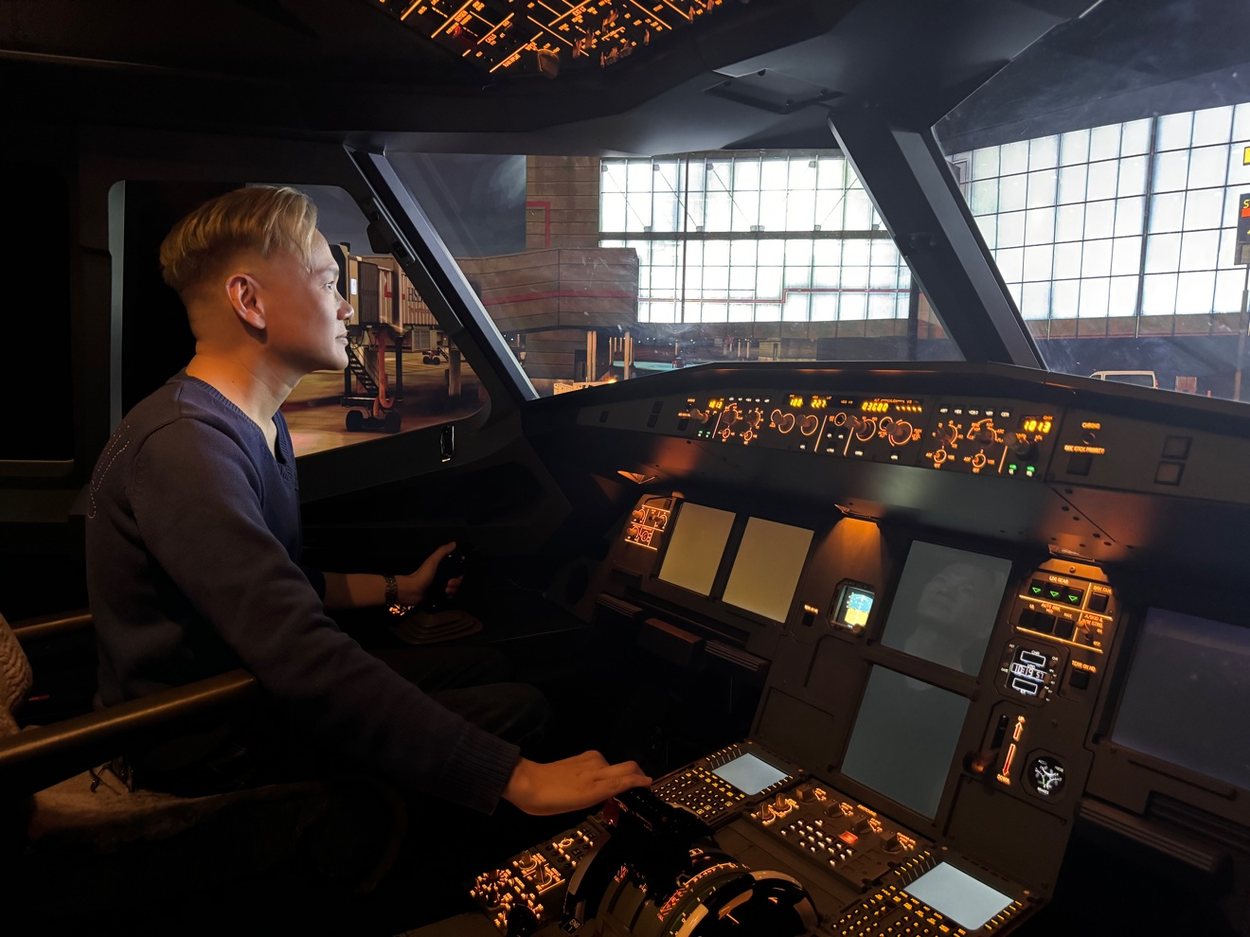
At the controls of the 2024 simulator
The feel of it. From a Cessna’s yoke to an Airbus sidestick, seventeen years apart — these hands still remember.
bearever.com · A Retrospective — Private Pilot